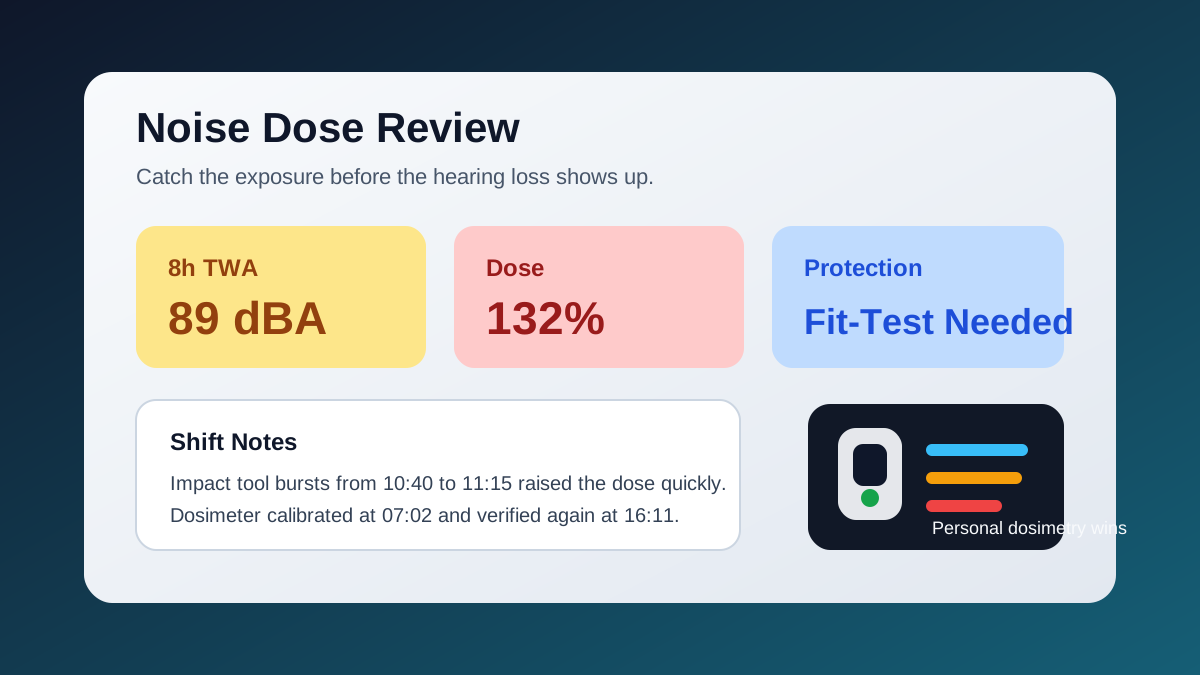
What Changed Recently and Why It Matters
As of March 15, 2026, the most useful federal hearing-conservation signal is not a new OSHA limit. It is better evidence about how often teams misread real exposure.
- On January 29, 2026, CDC/NIOSH eNews said 80% of 70 sampled landscapers were above the NIOSH recommended exposure limit.
- That same report said 53% of sampled workers were not wearing hearing protection when noise was measured.
- NIOSH Publication 2025-104, released in January 2025, pushed fit-testing as a practical way to verify real protection instead of assuming the labeled NRR is enough.
- OSHA still anchors hearing conservation at an 85 dBA 8-hour TWA action level, so weak sampling logic still creates weak compliance decisions.
Personal Experience #1: One Dosimeter Changed the Whole Story
Pro Tip: Calibrate your dosimeter before and after the sample. If the drift is outside tolerance, the reading is a story, not evidence.
The 7-Step Noise Dose Workflow I Trust
- Pick the worker with the most variable and noisiest realistic task mix.
- Calibrate the dosimeter and record settings before the shift starts.
- Log task changes, break periods, and unusual impact-noise events as they happen.
- Check whether hearing protection was actually worn, fitted, and kept in place.
- Run the final sample in the Noise Dose & TWA calculator.
- Review the result against your written program and retraining triggers.
- Store the exposure note with the same disciplined handoff used in clean safety data workflows.
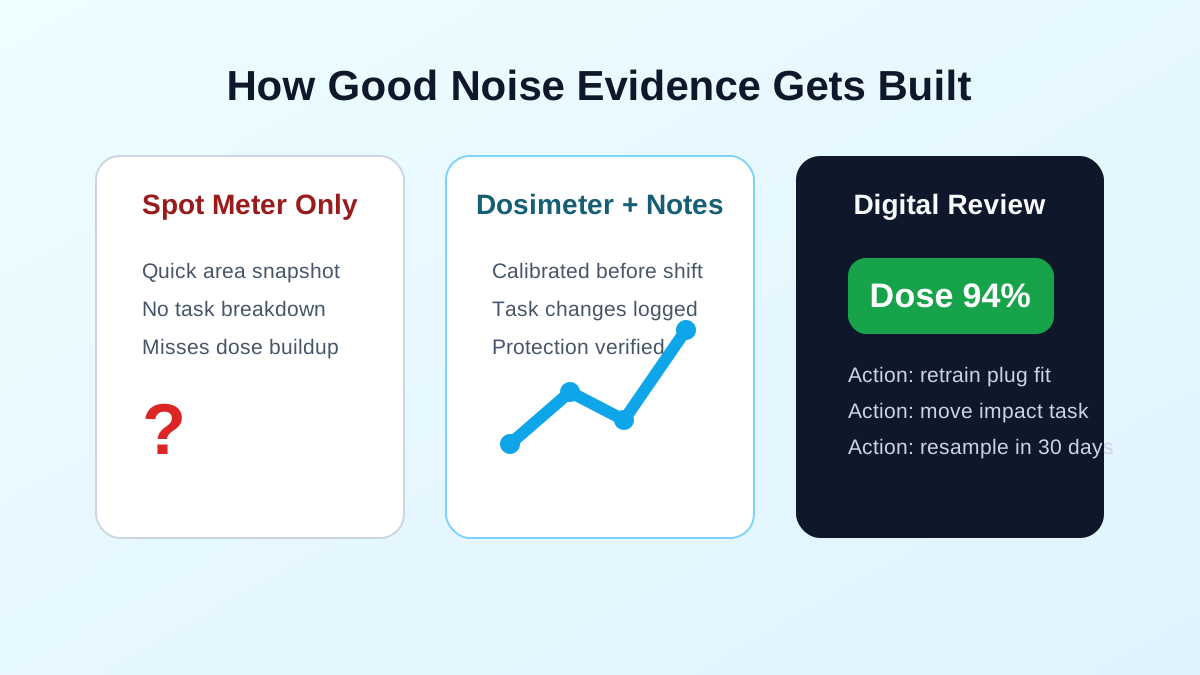
| Exposure workflow | Time per worker | Common blind spot | Audit confidence |
|---|---|---|---|
| Spot meter only | 5-8 min | Misses task-to-task dose buildup | Low |
| Dosimeter plus spreadsheet | 10-15 min | Settings drift and formula mistakes | Medium |
| Web Ocean noise workflow | 3-5 min | Low when calibration and notes are clean | High |
Personal Experience #2: The Error Was in the Settings
Pro Tip: If the shift is intermittent, do not summarize it with one vague note like “general production.” Task labels are what let you fix the source later.
Personal Experience #3: Fit-Testing Stopped a False Sense of Safety
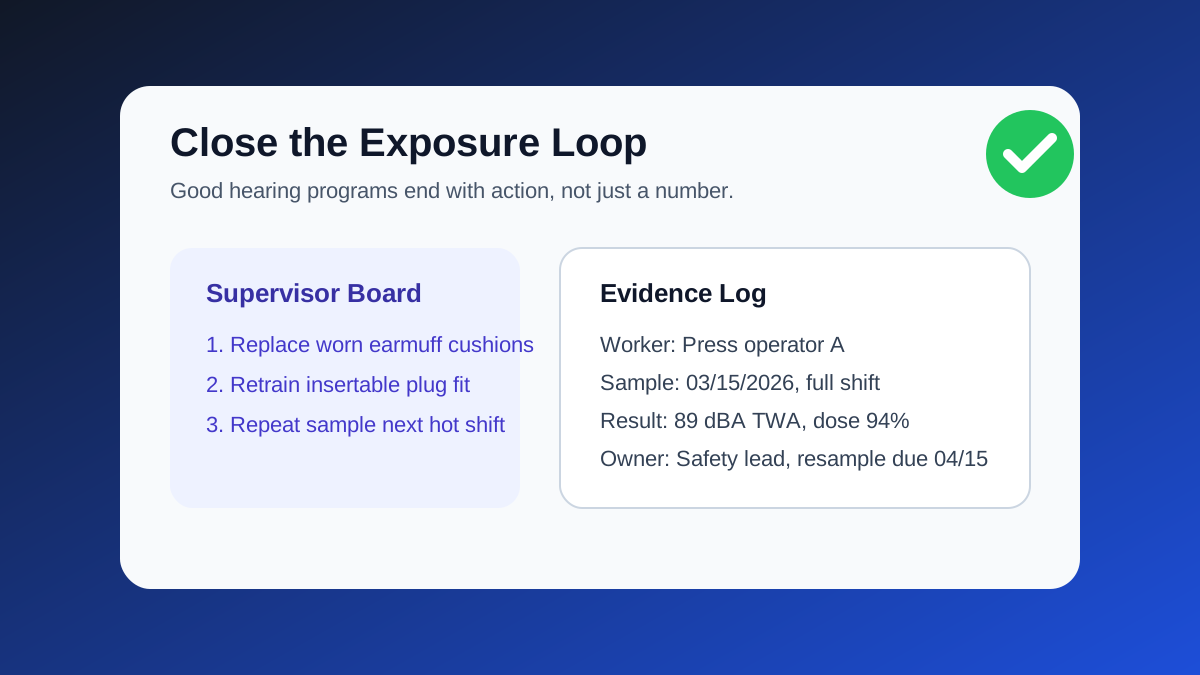
How the Website Fits the Real Job
The hard part is rarely the math. The hard part is getting one clean result you can explain to a supervisor, a worker, and an auditor without changing the story.
That is why I treat the calculator as the fastest control point in the workflow. It strips away spreadsheet friction, exposes dose problems quickly, and keeps the decision focused on what to fix next.
Source Links
- CDC/NIOSH eNews, January 29, 2026
- NIOSH Publication 2025-104 on fit-testing hearing protectors
- OSHA occupational noise overview
- OSHA 29 CFR 1910.95 occupational noise standard
- CDC/NIOSH workplace noise and hearing loss overview
Need a defensible noise decision this week?
Run one worker sample in the calculator, then share your hardest hearing-conservation problem in the comments.
Open Noise Dose CalculatorMeta Description (140 chars): Use this 2026 noise dose guide to catch hidden TWA math errors, log exposure fast, and tighten hearing protection before audits fail onsite.